
This is a slightly modified and updated version of what appeared in The Christian Post on July 4, 2026.
Why were so many churches silent about America’s 250th birthday?
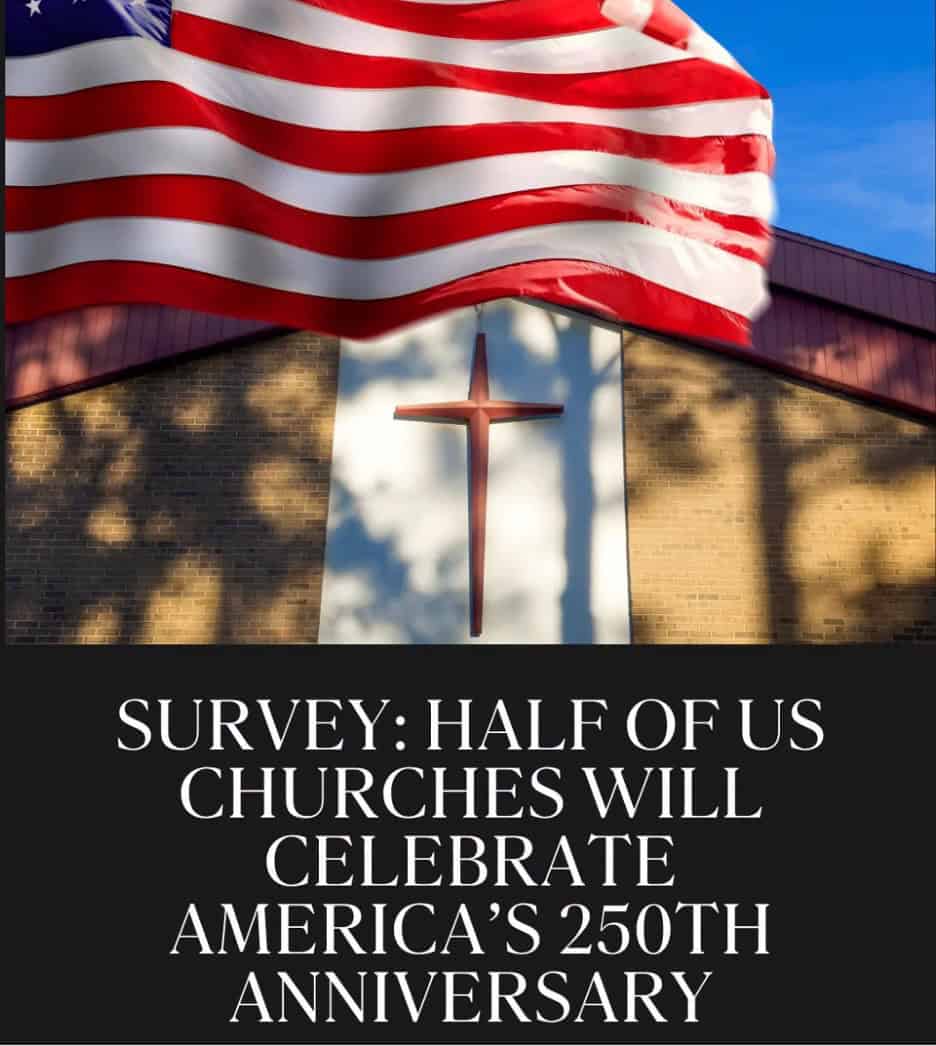
A recent survey by Lifeway Research reported that only half of Protestant pastors believed their churches should do something special to commemorate the nation’s anniversary (47% disagree, and 3% aren’t sure).
That should concern all of us. Not that I wanted churches to turn Sunday worship into a patriotic rally. Not because America is the Kingdom of God. Not because the pulpit should become a platform for partisan politics. But because this anniversary presented a rare teaching moment at a time when many in our nation are confused about freedom and increasingly severed from the moral and spiritual foundations that made ordered liberty possible.
To ignore such a moment was a wasted opportunity.
What’s behind the hesitation of so many pastors? Some fear civil religion. They have seen services where the flag seemed more central than the cross, and where patriotic songs carried more emotional weight than the hymns of the church, or when America is spoke of in near-redemptive terms. These concerns are legitimate. The Church must never prize loyalty to country over loyalty to Christ.
Others fear political division and offending someone. They worry that a pastor who speaks gratefully about America’s founding will be labeled a “Christian nationalist.” Or a pastor who acknowledges America’s shortcomings may be accused of progressive revisionism. Silence seems safer.
Still others have slipped into a neo-fundamentalism. Instead of being Gospel-centered, or Gospel-driven, they have become “Gospel-only” pastors. They no longer talk about public things. They have lost the biblical and theological categories for speaking about the nation at all.
Stranger still, they can speak easily about “blessing the city,” which sounds local, humble and missional. But when the subject becomes the nation, they freeze. They know Jeremiah’s call to seek the welfare of the city, but they forget that Scripture also speaks of nations, rulers, laws, justice, judgment, repentance, providence and the public responsibilities of God’s people.
Os Guiness helps us here. Across books such as A Free People’s Suicide, Last Call for Liberty, Zero Hour America, and his recent America Agonistes, Guiness speaks with the voice of a modern-day prophet. He has repeatedly warned that America’s crisis is not merely political. It is moral, spiritual, historical, even civilizational. America’s deepest danger is not simply that one party may defeat another. It is that many Americans no longer understand what freedom is, what freedom requires, and what makes freedom sustainable.
Guiness’s great theme is that freedom comes with responsibilities. It is not doing whatever we want. It is not autonomy without restraint. True freedom is ordered liberty — freedom under truth, shaped by virtue, directed towards good. He reminds us that American freedom was shaped by the freedom of the Exodus story. It was not “every man doing what was right in his own eyes,” rather it was freedom that led to a covenant. This is exactly where pastors should speak.
The American experiment did not arise in a vacuum. Its language of human dignity, natural rights, ordered liberty, conscience, covenant, accountability and the rule of law drew deeply from Jewish and Christian sources — biblical sources.
America is not Israel. America is not the Church. America is not God’s chosen nation in any redemptive sense. But the American experiment borrowed heavily from biblical assumptions about creation, human nature, moral law, sin, freedom, responsibility and a nation “under God.”
If these foundations are forgotten, freedom becomes fragile. If liberty is cut loose from virtue, it becomes license. If rights are severed from duties, they become weapons. If citizens lose the capacity for self-government, they will eventually invite external control. If truth disappears, politics is only about power — which is exactly where we find ourselves today.
This is why the 250th should have mattered to the American church. To speak to this occasion, from the biblical text, need not compromise the gospel. It is to apply the Bible’s public truth to the nation and the moment in which God has placed us.
Paul instructed believers to pray for kings and all those in authority. The prophets spoke to nations. Jesus commanded his followers to disciple the nations. Public life, national life, international life, are not spiritually irrelevant. This year presents us with a moment to tell the truth about nations.
Pastors can say several things at once.
We can say that America has been blessed by God’s providence. We can give thanks for constitutional government, religious liberty, freedom of speech, the rule of law, ordered liberty and the sacrifices of generations who preserved these goods. We can speak about how the Bible influenced the founding generation.
At the same time, we can speak honestly about America’s sins — slavery, abortion, marriage infidelity, materialism, lawlessness, sexual anarchy (to name a few). We can say that America’s founding ideals were greater than America’s practices. But our failure to live up to our national creed does not mean those principles are false. It means, rather, that the nation stood, and still stands, for them. And God will hold us accountable for them, because God judges men and nations, and that, as Jefferson wrote, “his justice cannot sleep forever.”
We should tell our congregations that Christians should love their country without making it an idol. We can serve our nation and seek its good, without confusing it with the Kingdom of God.
We should say with great urgency is that if America does not recover a true understanding of freedom, we are in deep trouble. And because America remains the lead society of the Western world, our failure will not just affect us. A disordered America means a weakened West. A weakened West means a world less hospitable to liberty, conscience, human dignity and religious freedom.
In other words, this is not a moment for pastoral timidity. It is a time for pastoral clarity.
So, what should churches do?
First, pastors can preach one sermon or a short series on biblical freedom. And of course we are not limited to the 250th to do this. Any national holiday weekend will work–Presidents’ Day, Flag Day, or any July 4th weekend. Texts such as Galatians 5, John 8, 1 Peter 2, Acts 17, Romans 13, 1 Timothy 2, or from Exodus 14-20 provide rich material. The theme should not be “America is great,” but “freedom is a gift and a responsibility under God.”
Second, churches can lead prayers of thanksgiving, repentance, and intercession. Thank God for the blessings received. Confess national sins. Pray for our leaders. Pray for the renewal of the Church. Pray for citizens to use freedom rightly. Prayer for our nation and our leaders should be a given. We are commanded to pray for them. And yet, so many evangelical churches do not even do that!
Third, adult classes or forums at church could explore the biblical and historical roots of ordered liberty: covenant, conscience, virtue, self-government, the Declaration, the Constitution, religious liberty, and the difference between the freedom of 1776 (under God) and the revolutionary autonomy of 1789 (against God).
Fourth, churches can serve their communities in a visible way. Love of nation should lead to love of neighbor, civic responsibility, and public service.
Fifth, pastors should teach their people how to be faithful citizens without becoming captive to any ideology or party. Christians should be the best citizens precisely because they know that no nation is ultimate.
Our 250th anniversary year is not just another birthday. It is an historic opportunity when most of the people in the pews will be receptive to the Word of God about this particular moment in our nation’s history. Pastors should not waste the opportunity. Rather, they should use it to help their people think rightly about the United States, its founding, and the path before us.